Private Clients & Families
Individuals and families seeking thoughtful estate, trust, succession, and multigenerational planning.
It begins with purpose. It grows through relationship. And we stay for the journey.
We believe meaningful planning begins with understanding what a family hopes to protect, preserve, and make possible for generations to come.
Our role is not simply to design legal structures, but to build enduring advisory relationships—helping families navigate change, steward wealth wisely, prepare future generations, and remain grounded in what matters most.
Our vision is to build enduring advisory relationships with families—helping them plan with purpose, steward wealth wisely, prepare future generations, and navigate both opportunity and difficulty with trusted counsel by their side.
We envision wealth serving life—not life serving wealth.
Legal structures should protect what matters. Governance should help people exercise responsibility wisely. And wealth should ultimately become a resource for human growth, stronger relationships, meaningful contribution, and flourishing across generations.
We believe a family’s greatest legacy is not measured only by the wealth it transfers, but by the people it prepares, the relationships it strengthens, the values it carries forward, and the good it enables future generations to do.
Individuals and families seeking thoughtful estate, trust, succession, and multigenerational planning.
Families building, consolidating, or transitioning wealth who want a well-designed estate plan, asset coordination, and ongoing guidance as life changes.
Families whose members, assets, businesses, or beneficiaries span the United States and other jurisdictions.
Founders, entrepreneurs, and closely held businesses navigating ownership, succession, governance, and continuity.
Families whose planning may involve sophisticated trusts, complex ownership structures, multiple advisors, philanthropy, and long-term family governance.
Planning is ultimately about people—the lives they are building, the relationships they value, and the generations that follow.
Estate and trust planning ranging from foundational structures to sophisticated lifetime transfer and tax-sensitive strategies.
Living Trust · Wills · Power of Attorney · Guardianship · Family Asset Protection · Conservatorship · Gift Planning · Estate Tax PlanningWe design fiduciary frameworks around ownership, investment authority, distribution decisions, jurisdiction, asset protection, advisors, and multigenerational objectives.
Directed Trusts · Dynasty Trusts · Domestic Asset Protection Trust · Foreign Grantor Trusts · Trust Protectors · Situs & Migration · Decanting · Private Trust CompaniesCoordinated U.S. legal and trust planning for families with international assets, beneficiaries, businesses, residence considerations, or succession concerns.
FGTs · International Beneficiaries · Cross-Border Succession · Trust MigrationPlanning for founders and family enterprises where business ownership, leadership, liquidity arrangements, trusts, and family expectations intersect.
Ownership Succession · Trust-Owned Businesses · Buy-Sell Planning · Founder TransitionFamily-centered advisory work designed to connect governance, relationships, stewardship, philanthropy, and rising-generation preparation with the broader purpose of family wealth.
Here, Wealth Integration means coordinating financial capital with the family's human, intellectual, social, and spiritual capital, providing a broader foundation for family governance.
Wealth Integration · Family Governance · Family Councils · Rising Generation · Trustee–Beneficiary Governance · Strategic PhilanthropyDocuments matter. But the real work is connecting legal structure to the people, assets, responsibilities, and intentions behind it.
We believe family wealth is broader than financial assets alone. It also includes the people, knowledge, relationships, values, purpose, and capacities that shape a family’s ability to flourish across generations.
Our role is to help families integrate these dimensions rather than treating legal structures, financial assets, governance, and family relationships as separate conversations.
We begin with priorities, concerns, relationships, responsibilities, and long-term hopes.
Beneficiaries, trustees, spouses, children, advisors, and future generations all shape the design.
Trusts, entities, succession arrangements, governance, tax-sensitive strategies, and cross-border coordination are designed around the family.
We consider who decides, manages, distributes, oversees, and how beneficiaries and future leaders are prepared.
The objective is stronger relationships, responsible stewardship, meaningful legacy, and future generations equipped to flourish.
Planning begins with purpose.
Trust is built through relationship.
Stewardship unfolds over time.
And meaningful counsel means being there when it matters.
Significant wealth can create opportunity, but it can also introduce complexity into identity, relationships, decision-making, responsibility, and the lives of future generations.
Cedar Stream Law approaches family wealth as more than a collection of financial assets. We help families consider how legal structures, governance, family relationships, leadership, philanthropy, and rising-generation development can work together within one coherent framework.
Explore what wealth is for, what responsibilities accompany it, and how financial resources can support—not define—the lives of family members.
Develop practical frameworks for communication, shared decision-making, family meetings, councils, governance roles, and stewardship of shared assets.
Prepare family members for ownership, leadership, trusteeship, philanthropy, and stewardship before responsibility arrives.
Help fiduciary structures and human relationships reinforce rather than undermine one another over time.
Connect ownership, leadership, governance, succession, and family relationships as the enterprise moves across generations.
Use philanthropy as a practical setting for stewardship, shared decision-making, values, leadership, and intergenerational participation.
For some families, legacy is expressed not only in what is preserved, but also in what is shared, taught, and put to meaningful use.
An annual membership for ongoing estate-planning care.
Estate planning should not end when the documents are signed. Families change, assets change, laws evolve, and responsibilities shift over time.
The FamilyCare Program is Cedar Stream Law’s annual membership program designed to help keep your estate plan current, coordinated, and aligned with your family’s changing circumstances.
We review your estate planning documents, family circumstances, assets, fiduciary appointments, and planning priorities.
FamilyCare provides periodic reminders to revisit asset ownership, titling, beneficiary designations, and other matters that may affect how your plan operates.
Marriage, children, relocation, new assets, business transitions, trustee changes, and changes in law may require your plan to evolve.
Important questions often arise between formal updates. FamilyCare provides an ongoing relationship so that guidance is available when circumstances change.
FamilyCare helps keep your estate plan connected to the life it is intended to serve—not simply a set of documents placed on a shelf.
Good planning is not only technical. It is thoughtful, personal, and built on relationships that deepen over time.
At Cedar Stream Law, we believe thoughtful planning begins with understanding.
Our educational programs are designed to help families, professional advisors, and members of the community better understand the legal, relational, and generational questions that often come before important planning decisions.
Education is not separate from planning. It is often the first step toward it.
We begin by helping people understand the issues that may affect their families. Understanding creates better questions. Better questions lead to meaningful conversations. Those conversations can inform thoughtful planning. And when planning is complete, FamilyCare provides a framework for keeping the plan connected to the family as life continues to change.
Education creates understanding. Planning creates structure.
An enduring relationship helps that structure remain connected to the family over time.
Purpose helps clarify what matters.
People give planning its meaning.
Planning creates the appropriate legal and fiduciary structure.
Stewardship prepares people to carry responsibility well.
And the larger goal is the long-term flourishing of the family.
Our educational programs may be offered in three different formats, each designed for a different kind of learning experience.
Interactive. Practical. Family-centered.
Workshops are smaller, participatory sessions designed for people who want to move beyond general information and work through practical questions in a more interactive setting.
Rather than simply listening to a presentation, participants may explore scenarios, discuss planning questions, use checklists or discussion guides, and consider how broader concepts may apply to their own families or organizations.
Programs may be offered for families, community groups, professional advisors, or private organizations.
Accessible education, wherever you are.
Webinars are online educational programs designed to make important planning concepts easier to understand and more widely accessible.
They are particularly well suited for focused legal and planning topics that can be explained clearly in a structured online format.
Live webinars will provide scheduled online programs with opportunities for real-time learning and, where appropriate, questions and discussion.
Selected recorded webinars may remain available after the live program so that families and professional advisors can continue learning at their own pace.
Broader education for communities and professional groups.
Seminars are presentation-based educational programs designed for larger audiences.
They provide a structured introduction to important legal and planning issues and are particularly appropriate for community organizations, professional associations, businesses, educational institutions, and groups seeking a broader understanding of a topic.
Unlike workshops, seminars are generally designed to provide a broader framework and shared understanding rather than individualized or highly interactive exercises.
Smaller groups, interactive discussion, practical exercises, and deeper engagement with family or planning questions.
Focused online education offered either live or on demand, accessible from wherever participants are located.
Structured presentations for broader audiences, communities, organizations, and professional groups.
Please check back for upcoming:
Cedar Stream brings legal architecture, charitable and legacy planning, and family wealth integration together so that sophisticated structures remain connected to purpose, people, stewardship, and generations to come.
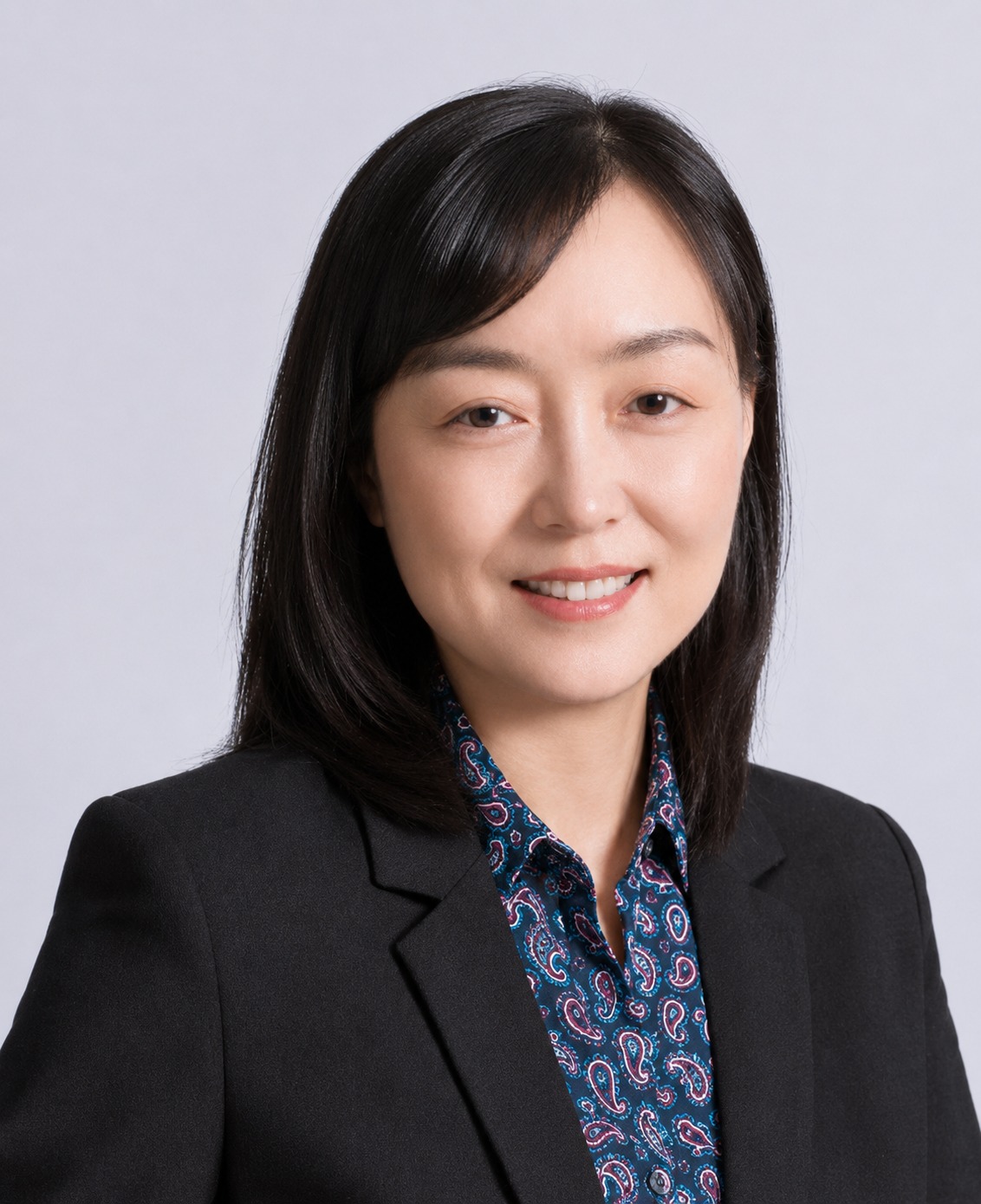
California-licensed & PRC-qualified Attorney | CTFA | TEP | CKA®
Kay advises private clients, internationally connected families, and family enterprises on sophisticated estate and trust planning, advanced fiduciary structures, cross-border planning, succession, and family governance.
Her work focuses on translating complex family objectives into legally sound, tax-sensitive, and practical structures designed for long-term stewardship. She works with families whose planning may involve multiple jurisdictions, family enterprises, sophisticated trusts, fiduciary design, charitable objectives, and multigenerational considerations.
My approach to this work has been shaped by what I have witnessed over the years.
I have seen the security that wealth can bring to a family. I have also seen the wounds it can leave behind.
I have seen relatives divided by money and inheritance, and brothers and sisters ultimately facing one another in court over family property. I have seen children grieving the sudden loss of a parent while, at the same time, feeling anxious and unprepared as they confront substantial wealth, complex assets, and unfamiliar legal arrangements. I have also seen couples who supported one another through the most difficult years of building a business and a life together, only to grow apart after success and financial comfort arrived.
As a lawyer, I once regarded mastery in the use of trust-planning tools, legally sound and compliant structures, and reasonable and efficient tax outcomes as the highest aims of my practice. But after witnessing one difficult family story after another, I gradually came to realize that if planning begins with wealth and ends with distribution, something essential may still be missing beyond the pages of even the most carefully drafted legal documents.
In 2017, I stepped away from the field of corporate law in which I had worked for many years and began focusing increasingly on private wealth planning, trusts, and family legacy.
My work evolved from offshore trusts to U.S. domestic trusts; from focusing on trust structures to evaluating the tax consequences of those structures; from concentrating primarily on assets themselves to considering how financial capital intersects with family relationships, human and social capital, intellectual capital, and spiritual capital; from a traditional model that begins with money and ends with distribution to a longer-term perspective centered on purpose, relationships, and generational development; from focusing on a beneficiary’s immediate interests to considering how wealth planning may help the next generation develop the capacity, sense of responsibility, and discernment needed to receive and steward wealth well; and from viewing wealth primarily through the lens of ownership to placing greater emphasis on stewardship—the responsibility, purpose, and long-term impact that accompany wealth.
Through this journey, my understanding of estate and wealth planning has continued to move from technique toward purpose, and from assets toward people.
These experiences have convinced me that wealth, by itself, does not automatically create security, harmony, or a lasting legacy. What often determines whether a family can endure and flourish over time are the values, relationships, capabilities, and choices that stand behind the wealth.
For that reason, trust planning should not be reduced to a one- or two-hour exchange of questions and answers between lawyer and client. It should be grounded in substantive communication, thoughtful explanation, and trust. A lawyer should understand not only the client’s assets, beneficiaries, and distribution objectives, but also the client’s intentions, legal challenges, practical concerns, and deepest hopes for family and future generations.
It is through those conversations that abstract legal provisions begin to connect with the experiences, choices, and aspirations of a real family. The resulting legal documents are no longer merely cold words on paper. They can carry the client’s most important intentions and entrusted wishes with warmth and humanity—and stand the test of time through the many years ahead.
My work is to bring these principles into practice as faithfully as I can.
I have therefore come to believe deeply that:
Legal documents should carry not only the weight of the law, but also the warmth of the intentions entrusted to them. Wealth planning should not only preserve what a family has built, but also prepare those who will one day receive and steward it.
For me, wealth and estate planning is a journey I walk alongside clients—a journey in which everything begins with purpose and ultimately returns to relationships.
To practice work that I genuinely care about, and to do so with passion, is something for which I am deeply grateful.
I hope to bring that same sense of gratitude to every client I serve.
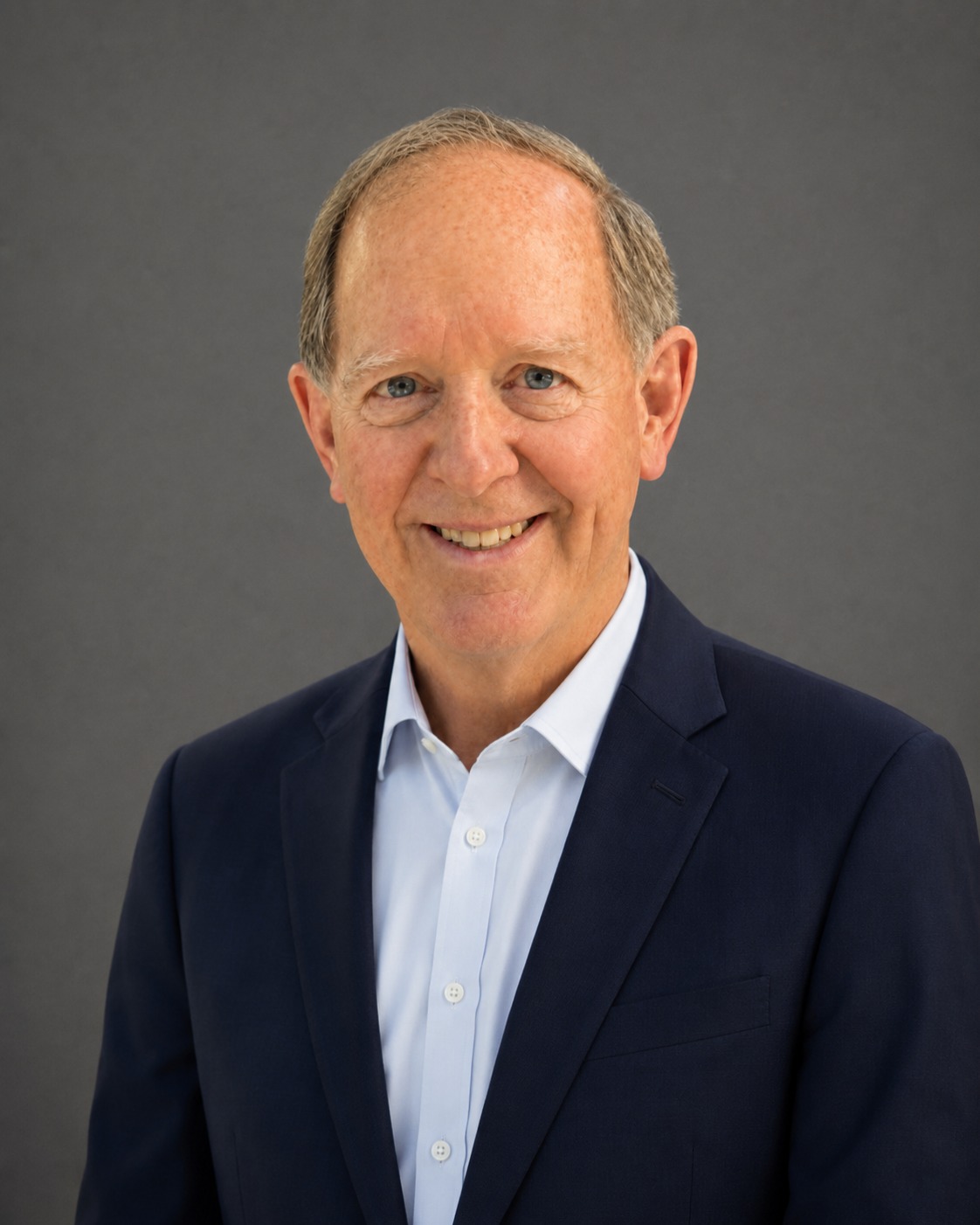
Admitted in Georgia | Not Admitted in California
For many families, philanthropy begins with a desire to give. Over time, however, it can become something much more: a way to clarify purpose, practice stewardship, engage rising generations, strengthen family relationships, and translate deeply held values into meaningful action.
Gregory L. Sperry has spent much of his professional life at the intersection of charitable gift planning, estate planning, taxation, generosity, and family legacy.
In addition to his role with Cedar Stream Law, Greg currently serves as Of Counsel to Taylor Odachowski Schmidt & Crossland LLC (TOSC).
For more than two decades, Greg held leadership roles with the National Christian Foundation, including service as Executive Vice President for Gift Planning. His work included helping develop and advance sophisticated charitable-giving strategies involving non-cash and complex assets, including interests in privately held companies and real property.
Before joining the National Christian Foundation, Greg co-founded the law firm of Sperry and Odachowski on St. Simons Island, Georgia. His practice focused on estate planning, taxation, and charitable giving. Earlier in his career, he helped establish the Christian Ministries Foundation, served in development leadership with MAP International, and directed legal-services offices serving low-income clients in Tennessee.
Greg’s work in international philanthropy also includes his role in establishing TrustBridge Global Foundation, a Swiss charitable foundation that operates international donor-advised fund programs and related cross-border giving structures. He previously served as Secretary to its Board and currently serves on its Board of Advisors.
Charitable planning often raises questions that extend beyond a particular gift:
Greg brings substantial experience with charitable gifts involving privately held business interests, real estate, donor-advised funds, charitable trusts, private foundations, and other non-cash or complex assets. His work has also involved coordination among families, professional advisors, and charitable organizations.
At Cedar Stream Law, Greg contributes charitable-planning experience to a broader family-centered planning process. His perspective helps families consider how generosity may be connected with estate planning, family relationships, stewardship, succession, and multigenerational legacy.
Philanthropy can become more than a transfer of property. When approached thoughtfully, it may provide a practical setting in which family members clarify shared values, prepare rising generations, practice stewardship, and pursue meaningful purposes together.
Generosity can be more than a transfer of assets. It can become a practice of stewardship across generations.
Wealth Integration & Family Governance
Peter is a PRC-qualified lawyer and not admitted as an attorney or registered as a Foreign Legal Consultant in California. His work with Cedar Stream Law is limited to nonlegal family-governance and wealth-integration advisory services. He does not provide PRC, California, or U.S. legal advice through Cedar Stream Law.
For a member of the rising generation, inherited wealth can arrive almost like an economic meteor—sudden, powerful, and largely unrelated to anything the recipient personally created. Although such a transfer may bring extraordinary opportunity, it can also alter identity, relationships, expectations, and responsibilities in ways for which the recipient and the family may have had little opportunity to prepare.
Legal and financial structures can organize the ownership, protection, and administration of assets. Structures alone, however, cannot ensure that wealth will be absorbed meaningfully into the lives of the people they are intended to serve.
Borong (Peter) Liu works with families at the intersection of wealth, purpose, governance, and multigenerational stewardship. His work reflects a broad understanding of family wealth—one that looks beyond financial assets to the human, intellectual, relational, social, and purpose-driven resources that influence whether a family can flourish across generations.
In Peter’s work, Wealth Integration refers to the deliberate process through which a family connects its financial wealth with the other forms of capital that shape family life and flourishing:
Wealth Integration therefore asks a broader question than whether assets have been transferred, preserved, or controlled successfully. It asks whether the “meteor” of financial wealth can be integrated with the family’s people, relationships, knowledge, values, purpose, and responsibilities—so that wealth can become a source of well-being and a legacy to cultivate across generations, rather than an isolated asset or an unintended burden.
Peter’s approach is family-specific, dialogue-based, practical, and attentive to cultural context. Rather than beginning with a predetermined structure or telling a family what it should do, he helps family members examine the questions beneath the structure.
What is the family’s wealth ultimately for? What are the aspirations of the family and its individual members? How are trust, responsibility, and decision-making developing? What preparation will rising-generation members need? How can governance arrangements support the family’s actual relationships, values, and stage of development?
Through structured inquiry and continuing family dialogue, Peter helps families clarify purpose, understand their dynamics, strengthen governance and relationships, prepare rising generations for responsibility and leadership, and translate shared aspirations into practical stewardship.
This work creates space for families to develop on their own terms while connecting their human priorities with appropriate legal, fiduciary, financial, governance, and philanthropic planning.
Drawing on extensive experience in PRC law, trusts, structured finance, cross-border wealth planning, family governance, and strategic philanthropy, Peter brings a multidisciplinary perspective to these conversations.
At Cedar Stream Law, his role complements the firm’s legal and fiduciary planning by helping families connect sophisticated structures with the people, relationships, values, responsibilities, and aspirations those structures are ultimately intended to serve.
Peter is a member of the 100 Year Committee for Family and Societal Flourishing, a global thought-leadership initiative jointly sponsored by Family Office Exchange and the James E. Hughes Jr. Foundation. The Committee explores the human, family, and societal implications of historic intergenerational wealth transfer, including how individuals, families, and communities can integrate significant financial transitions and continue to flourish.
Peter is also a member of the Purposeful Planning Institute, a nonprofit learning center and professional collaboration community for advisors and consultants serving families of wealth and families in business. Its multidisciplinary work advances more purposeful, relational, and integrated approaches to family wealth, legacy, individual well-being, and family flourishing.
The first step is a focused conversation about your family, your concerns, the complexity of your planning, and what you hope to accomplish. We will consider whether Cedar Stream Law is the right fit and, where appropriate, discuss the scope, process, and next steps.
We do not expect families to have every question answered before they call. Sometimes the first step is simply having the right conversation.
Bring what matters most to you.We will begin there.
Thoughtful planning begins with understanding.